

































Products tagged with 'metal earth'
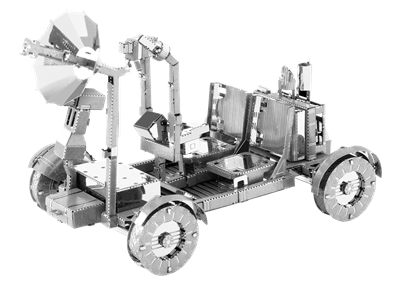
MMS094
APOLLO LUNAR ROVER
Was affectionately known as the moon buggy. It was used on the moon in the last three missions of the American Apollo program (15, 16, 17) during 1971 and 1972. Powered by only two silver-oxide batteries, the Apollo 17 was able to drive for 35.74 km (22.21 miles) across the surface of the moon.
$0.00
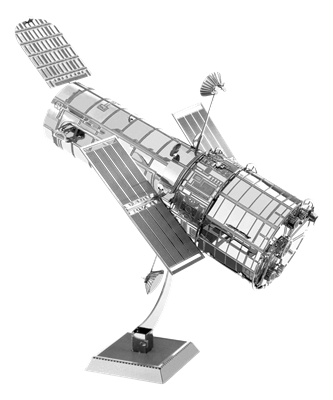
MMS093
HUBBLE TELESCOPE
Hubble Telescope was launched into low Earth orbit April 24th, 1990. Operating outside the distortion of the Earth’s atmosphere it is able to take extremely high-resolution visible-light images. Hubble has recorded some of the most detailed visible-light images ever, allowing a deep view into space and time.
$0.00
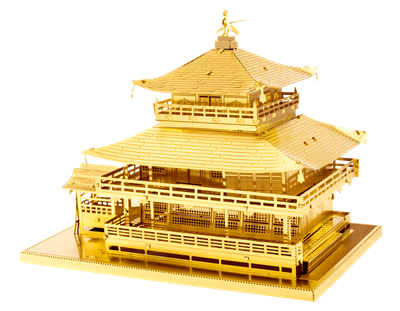
MMS090G
GOLD KINKAKU-JI
Gold Kinkaku-ji is a three story Zen Buddhist temple located in Kyoto Japan, known as the Temple of the Golden Pavilion. The top two floors are completely covered in gold leaf. It is Japan's best known temple and is a UNESCO World Heritage Site.
$0.00
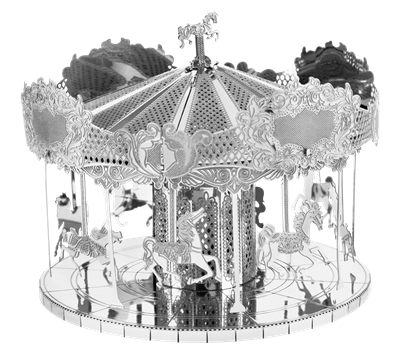
MMS089
MERRY GO ROUND
A merry-go-round, is an amusement ride consisting of a rotating circular platform with seats for riders. The "seats" are traditionally in the form of rows of wooden horses or other animals mounted on posts, many of which are moved up and down by gearwork to simulate galloping, to the accompaniment of looped circus music.
$0.00
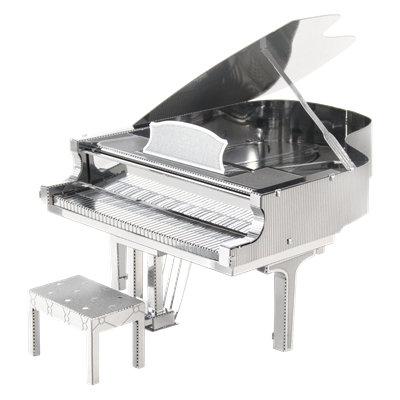
MMS080
GRAND PIANO
Grand Piano- Is a musical instrument played using a keyboard consisting of 52 white keys and 36 black keys that cover a range of more than seven octaves. The Grand Piano is designed so that its frame and strings are parallel to the floor with the strings extending away from the keyboard. The piano also includes 3 foot pedals used to change the instrument's sound in various ways. Grand Piano photo: The photo is owned by Steinway & Sons and must always be attributed: "Photo: © Copyright Steinway & Sons".
$0.00
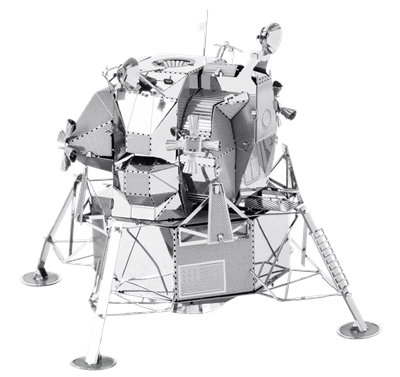
MMS078
APOLLO LUNAR MODULE
Apollo Lunar Module was a two part spacecraft used to carry a crew of two from lunar orbit to the surface of the moon and back. The descent stage served as the launch pad for the ascent stage plus it housed the landing gear, engines and fuel needed for landing. Six such craft successfully landed on the Moon between 1969 and 1972.
$0.00