




































All Classic Models
MMS126
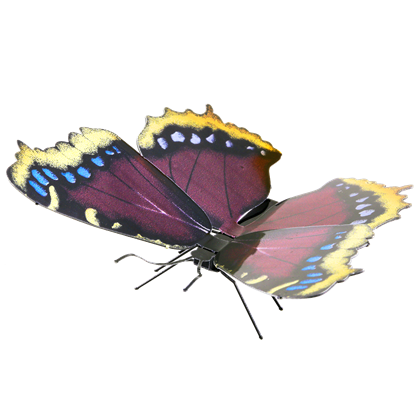
MOURNING CLOAK
1 Sheet
Easy
The Mourning Cloak is a large butterfly native to Eurasia and North America. This powerful flier is sometimes found in areas far from its usual range during migration. The Mourning Cloak has a lifespan of 11-12 months, one of the most extensive lifespans for any butterfly.
$0.00
MMS125
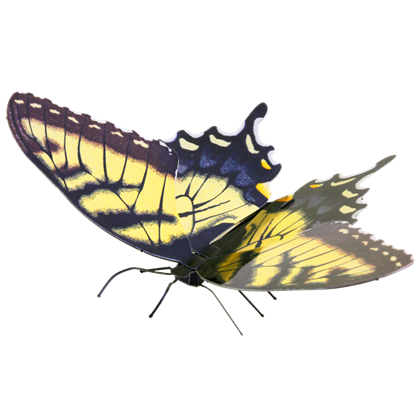
TIGER SWALLOWTAIL
1 Sheet
Easy
The Tiger Swallowtail is native to eastern North America as well as Turkey. The male is yellow with four black “tiger stripes” on each forewing. Females may be either yellow or black, making them dimorphic. The yellow morph is similar to the male, but with a conspicuous band of blue spots along the hindwing, while the dark morph is almost completely black. This model is based off of the female yellow morph.
$0.00
MMS124
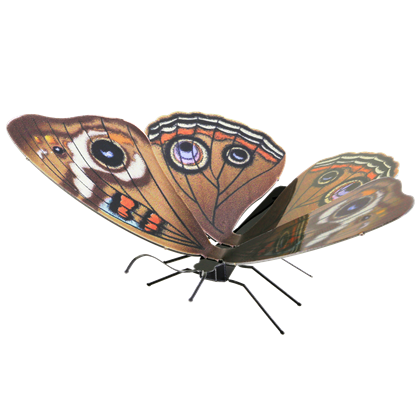
BUCKEYE
1 Sheet
Easy
The Buckeye is found in southern Manitoba, Ontario, Quebec, and Nova Scotia; all parts of the United States except the Northwest.. The bold pattern of eyespots and white bars on the upper wing surface is distinctive in much of its range. The eyespots likely serve to startle or distract predators, especially young birds.
$0.00
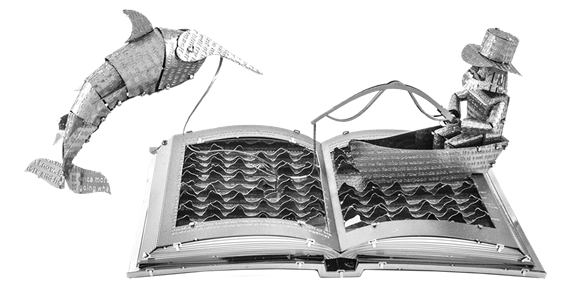
MMS117
THE OLD MAN & THE SEA BOOK SCULPTURE
2 Sheets
Moderate
The Old Man and the Sea is a novel by Ernest Hemingway tells the story of a battle between an aging, experienced fisherman, Santiago, and a large marlin.
$0.00

MMS041
LIBERTY BELL
1 Sheet
Easy
Located in Philadelphia, Pennsylvania, the Liberty Bell is an iconic symbol of American independence. Upon the bell read the words "Proclaim LIBERTY throughout all the land unto all the inhabitants thereof." It weighs 2,080 pounds and is suspended from what is believed to be its original yoke, made of American elm.
$0.00
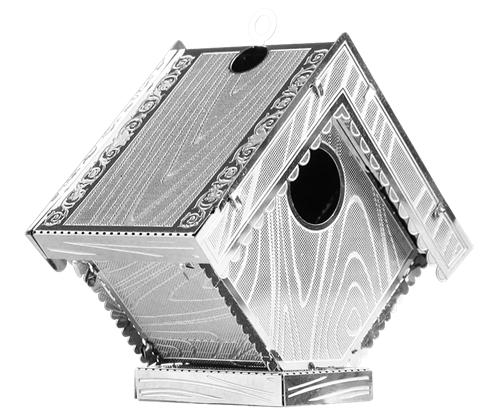
MMS039
BIRD HOUSE
1 Sheet
Easy
This bird house is modeled after a wren’s ideal home. Wrens aren't picky about their homes and will nest in small, plain houses. Just make sure the entry holes measure about 1 inch in diameter to let the wrens in and keep predators out.
$0.00
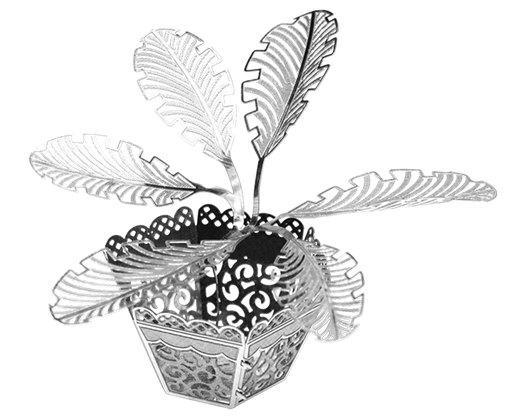
MMS021
SAGO PALM TREE
1 Sheet
Easy
The Sago Palm Tree (Cycas revolute) is often called a “living fossil” because it is one of the most primitive seed plants alive today. Its origin traces back to ancient flora of the Mesozoic era more than 200 million years ago. It is easily recognizable due to its distinctive whorled feathery leaves.
$0.00